
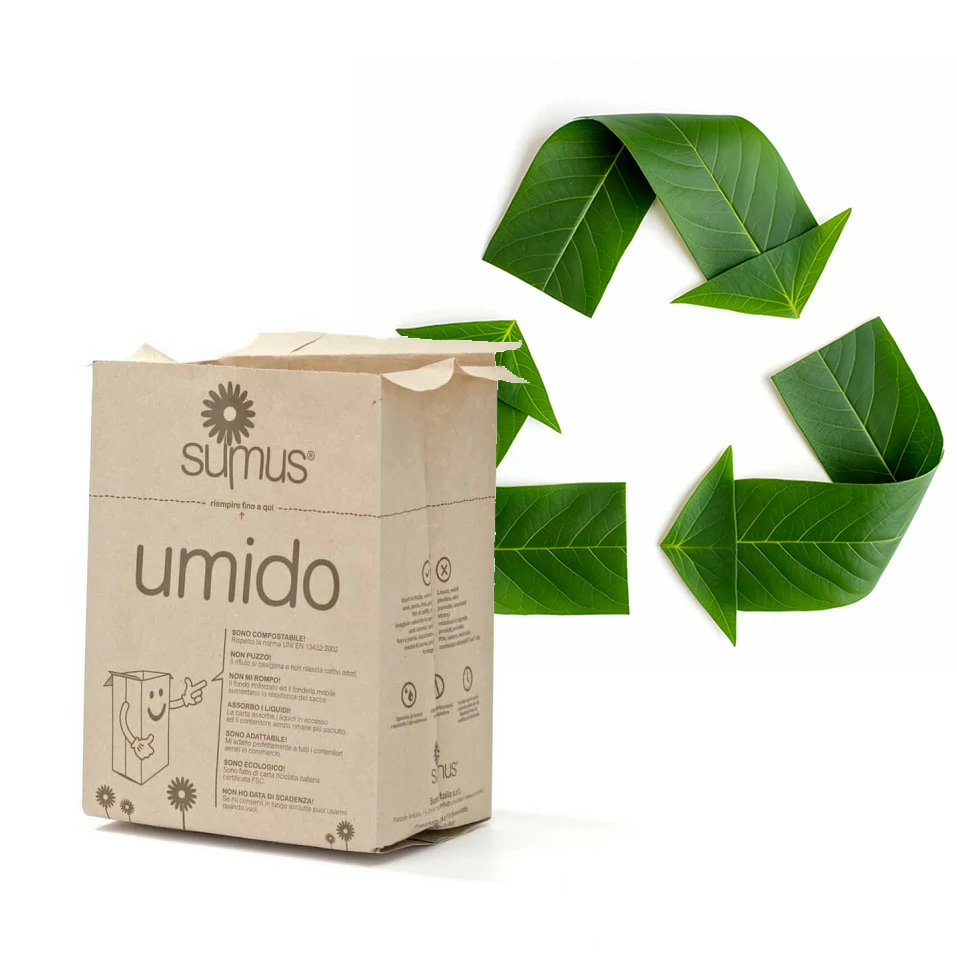
The separate collection of the wet fraction is one of the most virtuous practices we can adopt in our homes. It is a fundamental gesture to reduce the volume of landfill waste, produce quality compost and close the circle of sustainability. However, let's face it, the daily management of organic waste can turn into a real hassle. Who has never fought with bags that break on the prettiest, leaving a trail of malodorous liquids from the sink to the condominium bin? Who has never turned up their nose when opening the dustbin, bathed in unpleasant odors that seem impossible to eliminate?
These small daily frustrations are so common that they are almost accepted as a necessary evil. We have become used to doubling the bags, to running to throw away the garbage even if the bag is half empty, or to using tricks to absorb liquids. But what if there was a radically different solution? A technology as simple as it is ingenious, capable of solving all these problems at the root? This solution exists and it's called Sumus. We are not talking about a simple bag, but about an innovative system based on a material that we have always known: paper. A special paper, recycled and treated to be incredibly durable and, above all, breathable. Get ready to discover how Sumus paper wet bags can revolutionize your kitchen and your approach to separate waste collection.
Why Is Wet Management Often a Challenge? The Problems We All Know
1. The Drama of the Losing Bags
It's the most common crime scene in the kitchen: you pick up the wet bag and... it drips. Leachate, that dark, foul-smelling liquid that forms on the bottom, is enemy number one. Traditional bioplastic bags are waterproof, which means that all the moisture contained in fruit and vegetable waste remains trapped inside, accumulating and creating the liquid that, at the slightest laceration, escapes and dirties floors, landings and elevators.
2. The Battle Continues Against Bad Smells
The waterproofness of bioplastic bags is also the main cause of bad odors. By trapping moisture, an anaerobic environment (without oxygen) is created perfect for the proliferation of bacteria responsible for putrefaction and miasms. Opening the dustbin becomes an experience to deal with holding your breath, and the smell can persist in the kitchen even after throwing away the bag.
3. The Environmental Impact: Is Bioplastic Really the Panacea?
Mater-Bi bags or other bioplastics are certainly a step forward compared to traditional plastic, but they are not without critical issues. To decompose properly, they require the specific conditions of industrial composting plants (high temperatures and controlled humidity). In domestic composting or if abandoned in the environment, their degradation times are considerably longer, and their production still depends on agricultural resources that could be used for food.
Sumus: Innovation that comes from paper. Not a Simple Bag.
From Nature, For Nature: The Secret of Recycled Paper
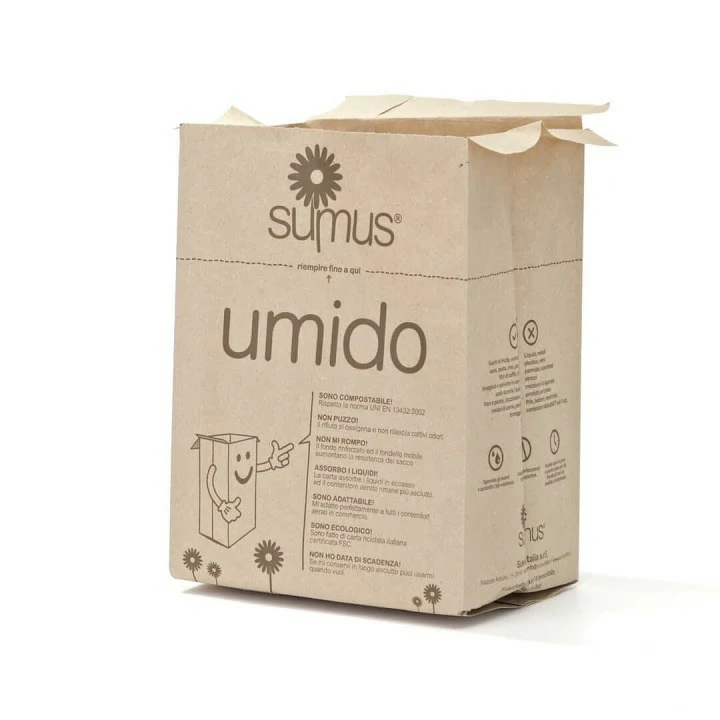
Sumus bags are not made of just any paper. They are made from 100% recycled cellulose fibers, a perfect example of the circular economy. But the real magic lies in their treatment. The paper is reinforced to resist humidity ('wet strenght' certification), which means that it does not unravel and does not break in contact with organic waste, even after days. This resistance is obtained without the use of glues or plastic additives, ensuring total and clean compostability.
Breathability: The Secret Weapon Against Odors and Mold
Here is the real revolution. Unlike bioplastic, Sumus paper is microporous and breathable. This allows the excess moisture contained in the waste to evaporate slowly. Imagine the bag as a skin that breathes. This process has extraordinary consequences: the waste partially 'dries' inside the bag, blocking the formation of leachate in the bud and inhibiting anaerobic putrefaction processes. The result? No more liquids, no more bad smells.
The Real Advantages You'll Touch with Your Hand
Switching to Sumus bags isn't just an ecological choice, it's a decision that improves the quality of life in the kitchen. Here's what really changes:
- 1
Stop Liquids and Leachate
Thanks to the breathable effect, the water evaporates. The bottom of the bag and the dustbin stays dry and clean. You can say goodbye to emergency cleaning and sticky floors. - 2
Drastic Weight and Volume Reduction
By evaporating water (which constitutes up to 80% of the weight of organic waste), the bag becomes considerably lighter and less bulky. This translates into less effort in transporting it and in more efficient management by ecological operators. - 3
Hygiene and Zero Bad Odors
By stopping putrefaction, Sumus bags eliminate the root cause of miasmas. Your kitchen will remain a fresh and pleasant environment, and you will no longer have to worry about throwing away the damp every night for fear of odors. - 4
Improving Compost Quality
The paper in the Sumus bag is a valuable source of carbon (structuring agent) that balances the nitrogen present in organic waste. This balance is essential for an optimal composting process, both industrially and domestically. The bag is not a container to be disposed of, but it becomes an integral part of the final compost, enriching it. - 5
Incredible Durability, Everyday Proof
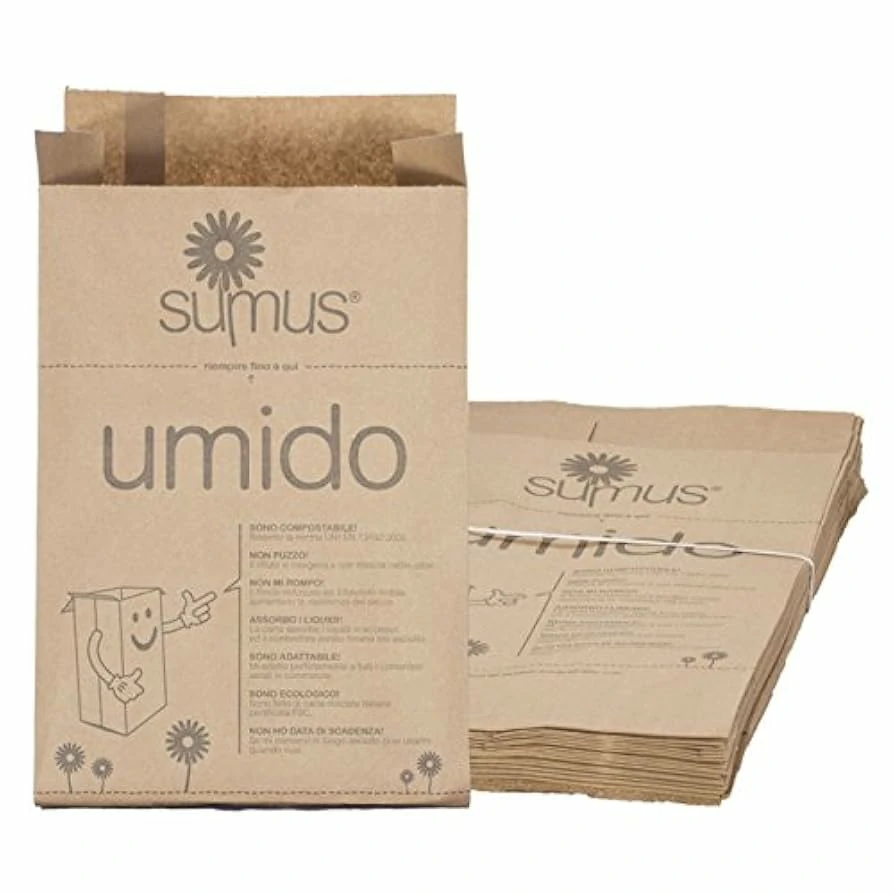
Don't be fooled by the fact that it's paper. These bags are designed to last. They do not tear easily and the reinforced bottom supports the weight without sagging, ensuring safe transport without surprises. They are ideal for the standard capacity of 8/10 liter under-sink bins.
Direct Comparison: Sumus in Carta vs. Traditional Bioplasty
Sometimes, to understand an innovation, you have to compare it with the standard. Here's a table that summarizes the key differences between the two types of wet bags.
| Feature | ✅ Sumus Recycled Paper Bags | ❌ Bioplastic bags |
|---|---|---|
| material | 100% recycled and certified paper, from a controlled supply chain. | Vegetable starches (corn, potatoes) or biodegradable polyesters. |
| Breathability | Elevated. It allows moisture to evaporate. | nought. It is waterproof and retains all moisture. |
| Odour Control | Optimal. It inhibits putrefaction and prevents odors. | Scarce. It promotes the formation of unpleasant odors. |
| Leachate Formation | Minimal or absent. The waste dehydrates. | Elevated. All the liquid accumulates at the bottom. |
| Wet resistance | excelling. Specific 'wet strength' treatment. | Good, but tends to tear if punctured or ironed. |
| Contribution to Compost | Positive. It provides carbon (structuring agent), balancing the compost. | Neutral/Weak. It biodegrades without providing significant nutrients. |
| Home Composting | Ideal. It decomposes easily and improves the process. | Problematic. It requires the high temperatures of industrial plants. |
| Environmental Impact | Circular economy (from recycled paper), 100% renewable. | It uses agricultural resources potentially competing with the food sector. |
Ready to Test the Difference?
Theory is important, but direct experience is worth a thousand words. Experience the strength and effectiveness of Sumus bags.
Buy the Pack of 50 Pieces Now!Practical User Guide: Make the Most of Your Sumus Bags
The 'What to Do' for a Perfect Experience
-
Use an Aerated Dustbin
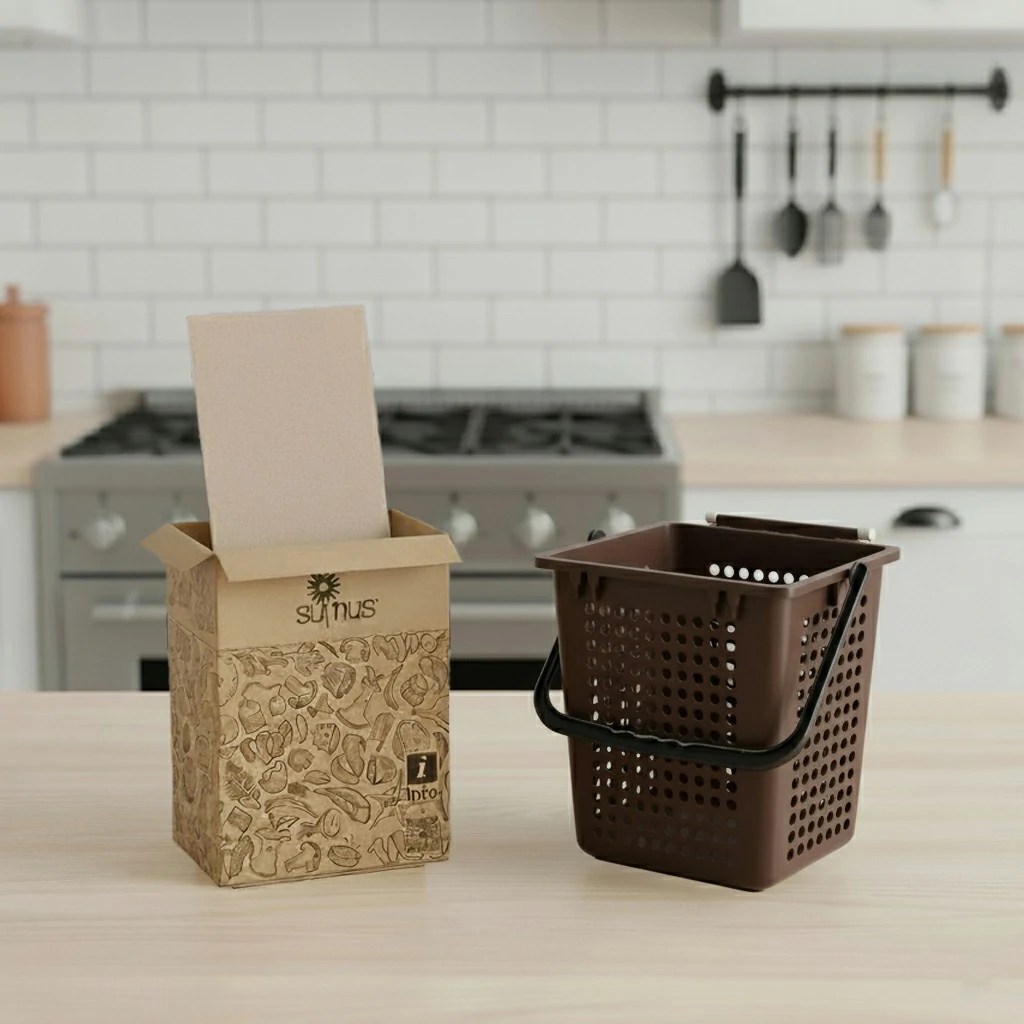
To maximize the breathable effect, the ideal is to use a basket with holes or slits that allow air to circulate around the bag. This speeds up the evaporation and drying of waste. -

Fold the Edges Well
When you insert the bag, wrap the top edges out, making them adhere well to the basket. This keeps the bag stable and prevents it from slipping inside when you insert the waste. -
Let the Wettest Waste Drain
Before throwing away very wet scraps (e.g., washed salad leaves, tea grounds), let them drain for a few moments in the sink. Even if the bag resists, reducing the starting water helps the process.
The Mistakes to Absolutely Avoid
-
Don't Pour Pure Liquids
The bag is designed to manage the moisture contained in food, not to contain liquids such as broth, milk or pasta cooking water. Always drain liquids before discarding solids. -
Don't Use Airtight Trash Bins
Using Sumus bags in a fully sealed container negates their main advantage. Air must be able to circulate to allow perspiration. If you have a closed bin, try not to seal the lid completely. -
Don't Overcompact Waste
Pressing the waste inside the bag reduces space for air circulation, slowing down drying. Fill it naturally, without forcing.
Pro tip!
In warmer months, if you notice the appearance of fruit flies, try covering fresh waste with a used piece of kitchen paper or napkin. This creates a physical barrier and helps absorb surface moisture, making the environment less attractive to insects.
Frequently Asked Questions (FAQ)
It's Time to Make the Right Choice. For You and for the Planet.
Every big change starts with a small gesture. Choosing the right wet bag is a small gesture, but with a huge impact on the cleanliness of your home and on the health of our environment.
Stop fighting a daily battle with smells and dirt. Embrace a smart, effective and nature-friendly solution. Switching to Sumus means choosing the peace of mind of a system that works, that keeps your kitchen clean and that contributes to a virtuous waste cycle. It's a small revolution that starts from your undersink.

