

Ultimate Guide to 2024 Kitchen Hoods: Suction or Filter? Choose the Perfect Model
Breathe New Air in the Kitchen: The Complete Guide to the Perfect Hood
Say goodbye to fumes, persistent smells, and grease. Find out how to choose the appliance that will revolutionize the way you cook and live at home, transforming your kitchen into a healthier, cleaner and more welcoming environment.
Whether you are a star chef at home or a lover of quick meals, an efficient kitchen hood is the secret ally for daily well-being. In this in-depth guide, we'll take you step by step, analyzing every detail to help you find the ideal model for your habits, your style and your cuisine.
Discover Now All Our HoodsThe Silent Problem That Plagues Every Kitchen
Think of your last great culinary feat: an aromatic sauté, a crispy fried fish, a ragout that simmers slowly for hours. The initial scents are wonderful, but what's left after that? Too often, these smells soak into curtains, sofas and clothes, persisting in the air for days. Added to this are the water vapor that condenses on walls and windows, increasing humidity and encouraging the formation of mold, and the invisible particles of fat that settle on the wall units, creating a sticky patina that is difficult to remove.
These are not simple cosmetic annoyances. Saturated air and excessive humidity can compromise the quality of home life and, in the long run, irretrievably damage the furniture and finishes of your beloved kitchen. The solution to all this is an appliance that is as essential as it is, at times, underestimated: the kitchen hood.
The Crucial Choice: Suction Hood vs. Filter hood?
Before you even fall in love with a smart design or function, the fundamental decision concerns the operating technology. There is no universal answer; the best choice depends critically on your kitchen configuration and whether you can install a chimney.
Suction Hood (with Evacuation)
How does it work? This system is the most traditional and effective. The hood captures fumes, vapors and odors and, through a tubular duct (the chimney), expels them directly outside the house. The stale air is physically removed from the room.
Key Advantages:
- Unsurpassed Effectiveness: It completely removes pollutants, including humidity, ensuring total air exchange and a healthier environment.
- Ideal for Intense Cooking: Essential if you love to fry, grill or use the wok. It handles large amounts of smoke and steam without problems.
- Easy Maintenance: Care is limited to the periodic cleaning of metal grease filters, which in most models are conveniently dishwasher-safe.
Points to Consider:
- Invasive Installation: It requires the presence or creation of a chimney, resulting in masonry for the external outlet.
- Structural Constraints: Installation may be impossible in certain apartments, especially in condominiums with restrictive regulations or in kitchens without access to perimeter walls.
Filter Hood (with Recirculation)
How does it work? The filter hood is an advanced technological solution. It sucks the air, purifies it through a double filtration system (a metal filter for fats and activated carbon filters for odors) and returns it, purified, to the kitchen environment.
Key Advantages:
- Total Flexibility: It can be installed in any kitchen, without the need for a chimney. It is the ideal solution for apartments, islands, interior kitchens or in case of architectural constraints.
- Fast and Clean Installation: The assembly is simple, fast and does not require invasive masonry work.
- Energy Efficiency: By not expelling air outside, no thermal imbalances are created. The air heated in winter or cooled in summer is not lost, ensuring energy savings.
Points to Consider:
- Different Effectiveness: Great for odors, but less effective at removing moisture and water vapor, which are released back into the environment.
- Recurrent Maintenance: Activated carbon filters become saturated and must be replaced periodically (every 3-6 months, depending on use) to maintain effectiveness, which involves an additional management cost.
The Assperr.it Expert's Advice
The Golden Rule: If you have the technical and structural possibility of installing a chimney, the fume hood It is almost always the preferred choice for its superior performance in terms of air purification. La filter hood On the other hand, it is an excellent and sometimes mandatory solution, which guarantees great flexibility and remarkable results, provided that the filters are properly and constantly maintained.
The Types: Each Kitchen Has Its Own Style
Once the technology has been decided, it's time to choose the model that integrates perfectly with the aesthetics of your kitchen. There are solutions for all tastes, from the most extreme minimalism to the most daring design.
Built-in Hoods: The Elegance of Discretion
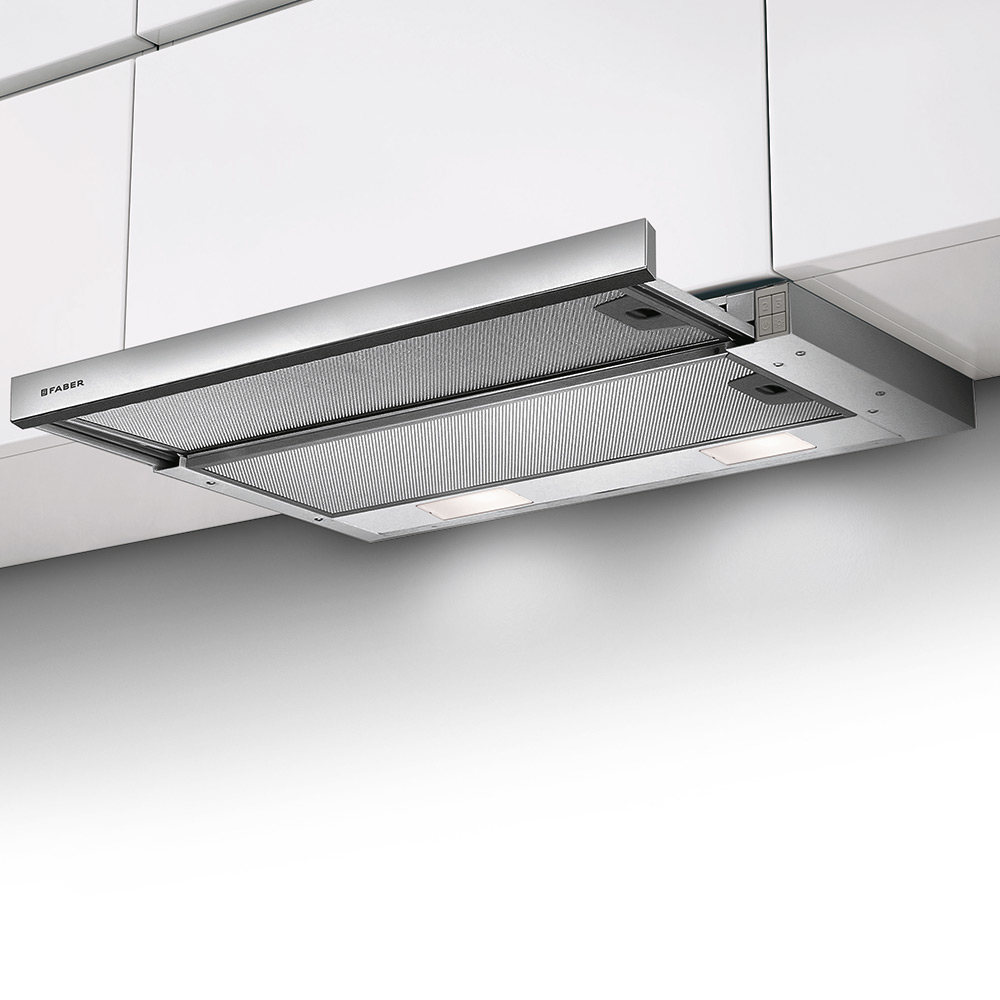
They are the perfect choice for those who want a kitchen with a clean and linear look. These models disappear inside the wall cabinets, leaving the furniture design unchanged. They are mainly divided into two categories:
- Undercabinet: They are installed under a wall cabinet, making them practical and functional. An example is the 60 cm Faber 152, a reliable classic.
- Income Group: They are inserted completely inside the wall unit or a plasterboard structure, making them totally invisible. La Faber In-Nova Smart is an example of perfect integration and advanced technology.
Wall Hoods: Protagonists of Style
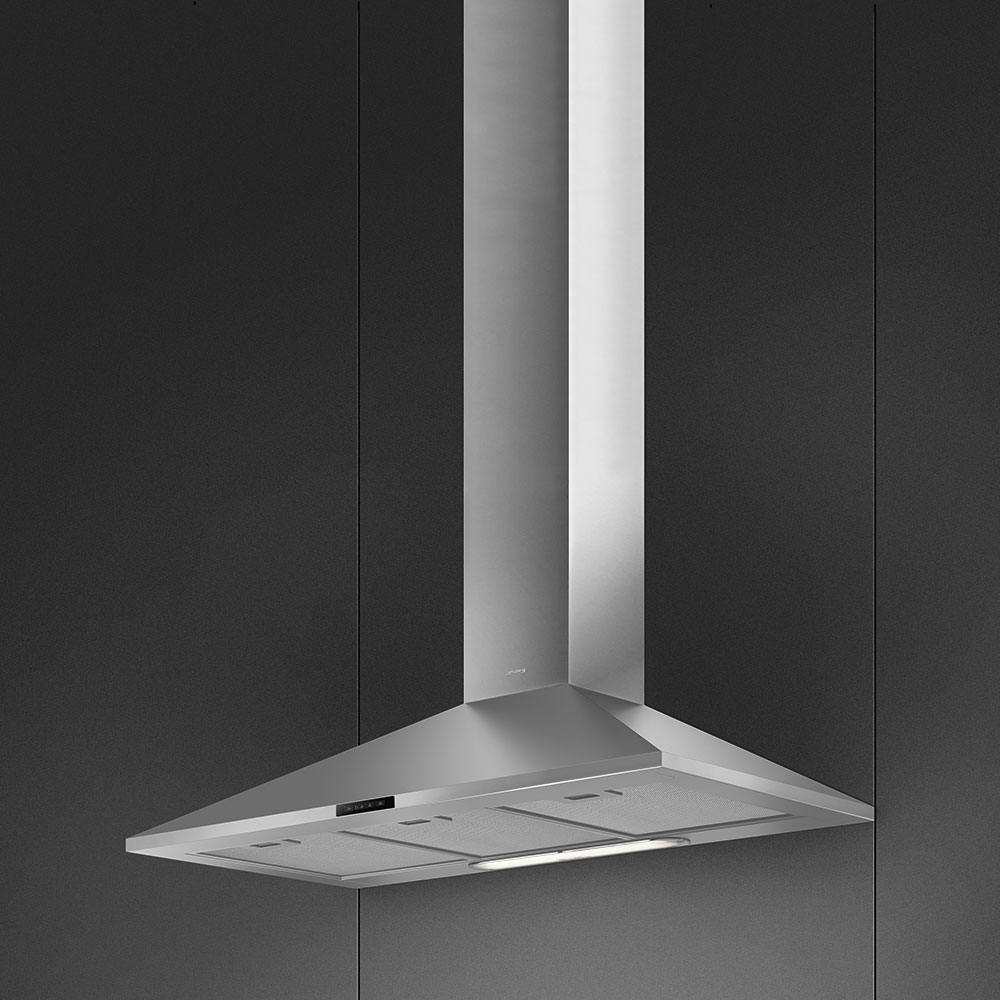
If you want the hood to become a piece of furniture, this is the category for you. Installed visibly on the wall above the cooktop, these hoods are available in countless shapes and materials, from stainless steel to glass, with designs that range from the classic 'fireplace' to the most modern inclined or T-shaped shapes.
- Modern Design: Models like the Bosch DWK65DK60 in black glass they combine breathtaking aesthetics and high performance.
- Classic Elegance: La Smeg KDE900EX stainless steel offers a professional and timeless look, perfect for spacious kitchens.
Comparison Table: The Best Built-in Hoods Compared
To help you better see the differences, we've compared three of our most popular built-in models. Find out which one best suits your needs.
| Feature | Faber In-Nova Smart | Krea ST propeller | Faber Inka Smart C |
|---|---|---|---|
| image | | 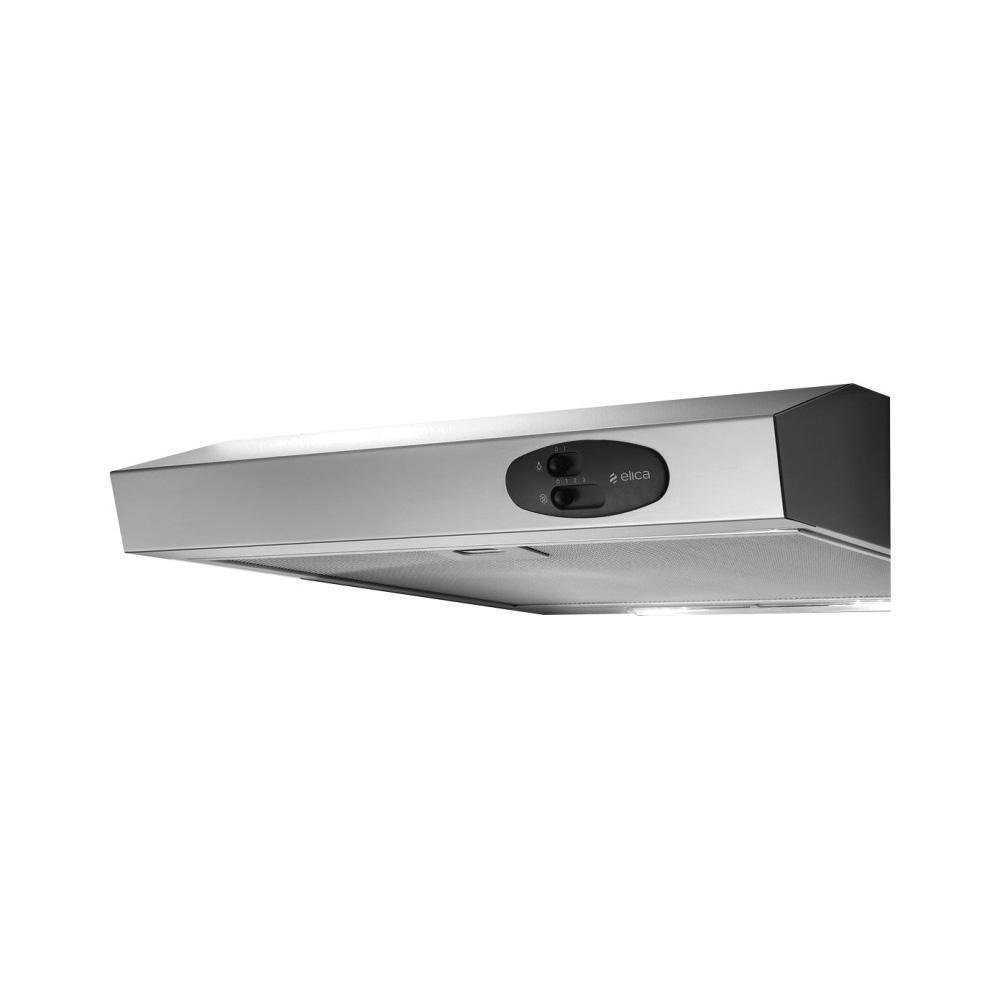 | 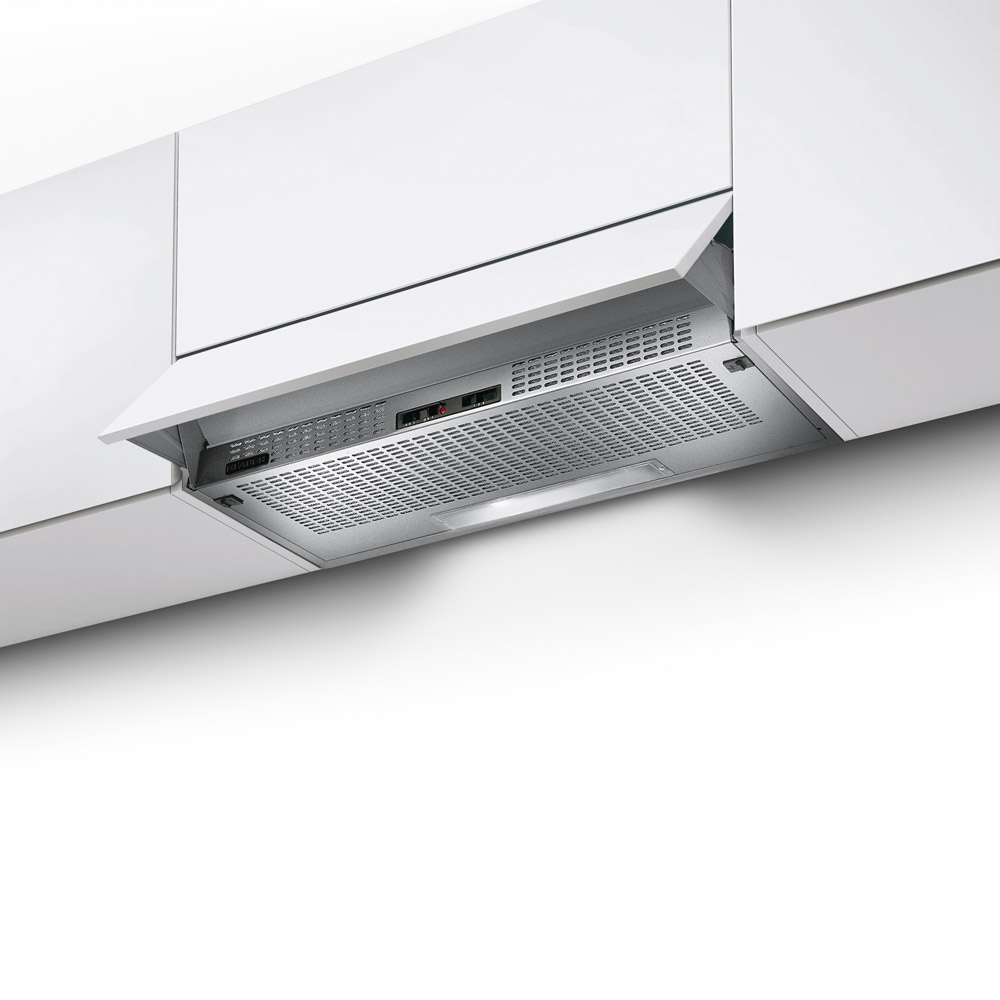 |
| Width | 60 cm | 60 cm | 70 cm |
| Typology | Invoicing Group (Total Integration) | Sub-wall cabinet | Sub-wall cabinet |
| Suction flow (max) | 370 m³/h | 250 m³/h | 335 m³/h |
| Energy Class | C | AND | D |
| lighting | LED | Halogen | LED |
| Peculiarities | Minimal, completely retractable design, ideal for a modern and clean look. | Economical and functional solution, easy to install, a timeless classic. | Good compromise between power and size, suitable for larger cookers. |
| Buy Now | View Product | View Product | View Product |
Technical Features Not to Be Underestimated
In addition to the type and design, there are some technical data that make the difference between a mediocre hood and an excellent one. Learning to read them will make you a more aware buyer.
Kitchen volume (m³) x 10 = Minimum flow rate required (m³/h).
For example, for a 4m x 4m kitchen with a 3m high ceiling, the volume is 48 m³. Your hood should have a flow rate of at least 480 m³/h. If you often cook fried foods or foods with strong odors, consider an even higher value to have a safety margin.
- LEDS: The best choice. LEDs consume very little, last a long time and offer a clear and natural light that does not alter the colors of the food. Most modern models, such as the Smeg KATE900EX, is equipped with it.
- Halogen: Less efficient and with a shorter lifespan, but it offers a warm and pleasant light.
Anti-grease filters: Present on all models, they are usually made of metal (aluminum or stainless steel). They are in charge of capturing fat particles. They must be cleaned regularly (about once a month) by hand or in the dishwasher to prevent them from clogging, reducing effectiveness and increasing the risk of fire. If damaged, they can be replaced, such as the grease filter for Elica hood.
Activated Carbon Anti-Odor Filters: Essential only for filter hoods. They contain activated carbon granules that absorb odorous molecules. They are not washable and must be replaced periodically to ensure effective filtration.
Installation and Maintenance: The Secrets to Long Life
Installation Mistakes to Avoid
Incorrect installation can compromise even the best hood. Pay attention to:
- Wrong Height: La Distance between hood and cooktop is critical. Generally, a minimum of 65 cm is recommended for gas and 50 cm for induction/electric ones. A shorter distance is dangerous, a higher one reduces effectiveness.
- Inadequate duct (for fume hoods): Using tubes that are too narrow, long or with too many curves drastically reduces suction capacity. Always follow the manufacturer's instructions on the duct diameter.
- Failure to Check the Air Recirculation: A powerful exhaust hood creates a depression in the room. Make sure there is an air vent to balance the pressure and allow optimal operation.
The Maintenance That Makes the Difference
A well-maintained hood lasts longer and works better. Here's a simple checklist:
- Grease filter cleaningEvery Month
- Replacement of Carbon Filters (if filtering)Every 3-6 Months
- External Surface Cleaning with Neutral DetergentsEvery Week
- Exhaust Duct Control and Cleaning (if aspirated)Every Year
It's Time for a Change of Air
Choosing the right hood is not only a matter of aesthetics, but a concrete investment in the health of your home environment and the durability of your kitchen. Eliminate odors, grease and excess moisture to rediscover the pleasure of cooking in a clean, healthy and always welcoming space. You have all the tools to make the right choice. Now it's your turn.
Explore Our Complete Catalog Now!